
Find Who Owns a Beaver Parcel
Beaver ownership research is a short record trail. Start with the address and identify the parcel in SGID. Then ask the Assessor what owner-of-record information it can release for that parcel number. Next, request the latest deed from the Recorder. Read the grantee alongside the legal description. That trail beats a map label, a mailing address, or an old tax notice. None of those prove current ownership.
- Locate the subject parcel through its address, parcel city, or tax ID in Utah SGID.
- Contact the Beaver County Assessor for the current value or ownership field available for that parcel.
- Request the latest recorded deed from the Beaver County Recorder and compare the grantee and legal description.
- If an LLC, trust, or estate appears, follow that separate entity or court record before drawing a conclusion.
The Recorder is no title agency. It keeps deeds, not an online index. The office says it will not perform extensive title research, so any formal purchase or title decision belongs with a title professional.
Use Beaver SGID to Identify the Land
Utah SGID offers a practical first step when no name is known. The Beaver Land Information Record layer can carry parcel ID, parcel address, parcel city, acreage, subdivision name, tax district, and building traits where supplied. Its map polygon helps separate similar addresses from rural tracts. Still, the layer is not a verified owner list.
The Utah parcel page links the Beaver data service.
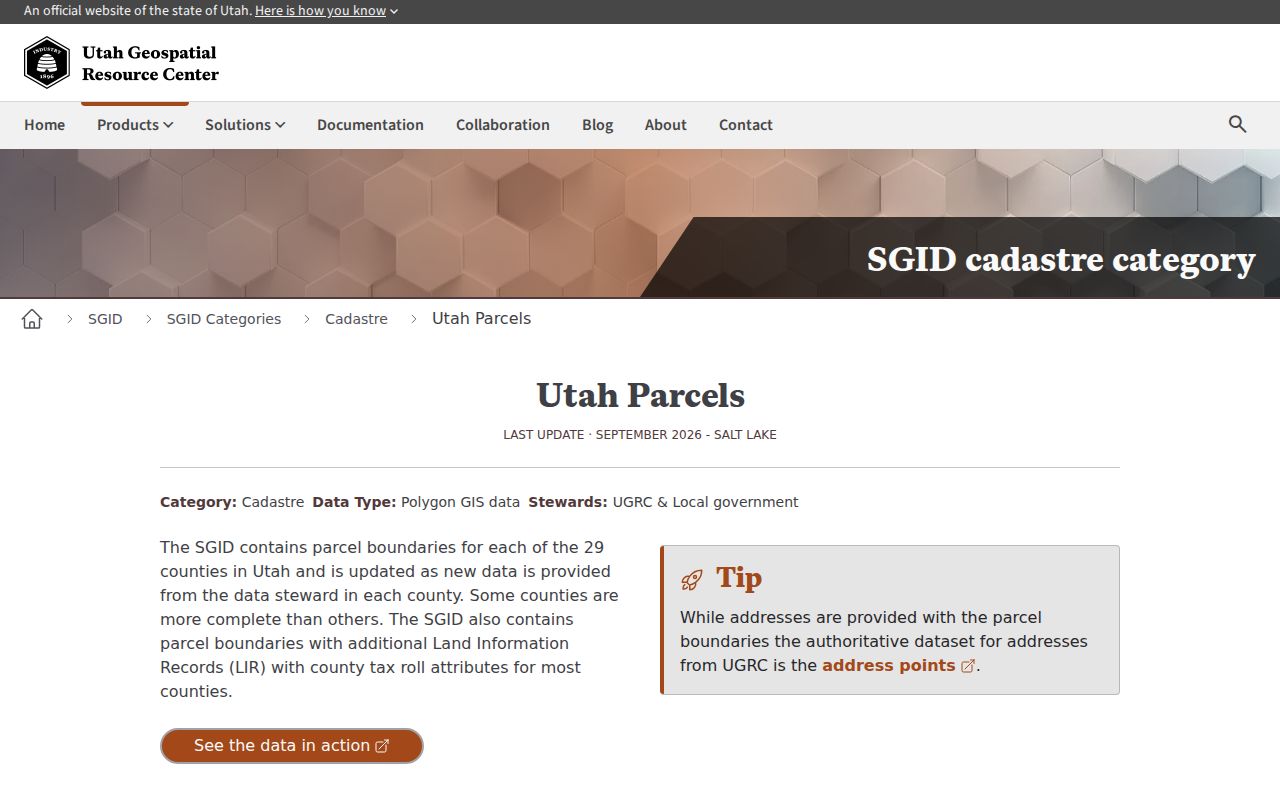
Record the full parcel ID and use it in the Assessor or Recorder request.
Which Assessor Owner Fields Are Available?
The Beaver County Assessor sets market values and administers greenbelt, declarations, and appeals. No confirmed owner-name search appears on the county page. Ask the staff directly which current record can identify the owner of a specific parcel, and hold off assuming a searchable owner card exists until they confirm it.
The office is at 105 East Center Street, Beaver. Its published phone number is 435-438-6400. The department page describes the office's valuation role.
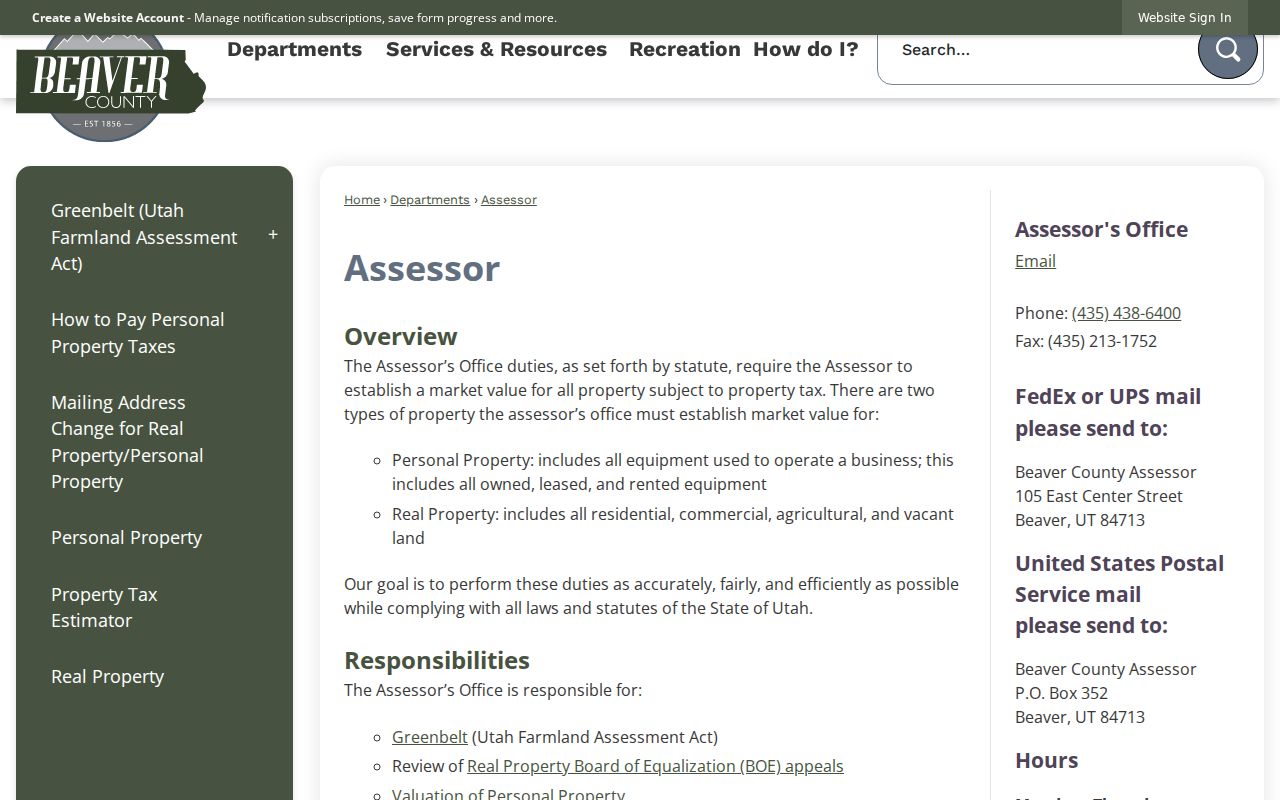
This is an office-information view, not a sample owner-of-record card.
Beaver Deeds Confirm a Named Grantee
The Beaver Recorder can search ownership of a parcel and supply recorded documents, though its system is not yet online. Include the parcel ID and legal description in any deed request if you have them. Inside the instrument, the grantee receives the conveyed interest. Match the deed's property description to the mapped parcel. Only then treat two records as the same land.
The Recorder page gives the request route. It also warns that the office does not act as a title agency for searchers.
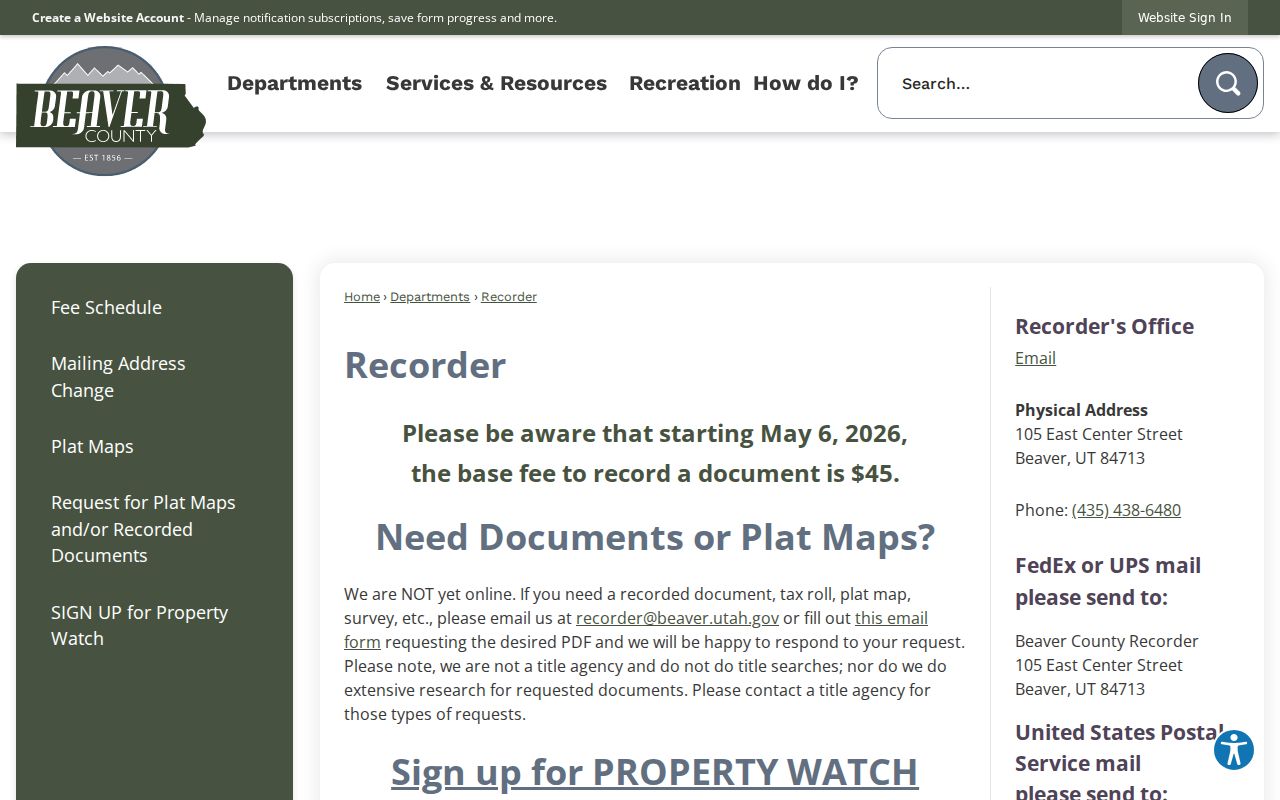
A deed is the record to check for a transfer; a tax notice may lag a recent filing at the Beaver County recorder.
LLCs, Trusts, and Estates Change the Trail
A deed may name a company, trustee, executor, or estate rather than a person. Utah's business-entity search can surface a filed LLC or corporation, along with public registered-agent or manager details. A registered agent is a filing contact. That person does not necessarily control the parcel.
Trust transfers often move through trustee deeds or affidavits. A death can open a probate case, a court order, or a personal representative's deed. Beaver's Recorder FAQ treats these as distinct transfer routes. A simple name search will not reveal every beneficial interest.
For an entity name, run the Utah Division of Corporations search for context. Confirm land ownership through the Recorder's deed itself.
Where Beaver Ownership Is Recorded
Several Beaver records can carry an owner clue. Each has its own date and purpose, so the source table helps decide what to request and how much it can prove. A map service never substitutes for the recorded deed.
| Source | Owner Info It Gives | Access |
|---|---|---|
| Assessor | Value and classification; public owner-search field not confirmed | Contact the county office |
| Recorder deed | Grantee and legal description on a recorded transfer | Request by form or email; no public index |
| Utah business search | Entity filing, status, and public agent or manager details | State Commerce search |
| SGID parcel layer | Parcel shape, address, city, and tax traits when available | Public map data; not an owner confirmation |
An owner of record is the person or entity named in the relevant official document. The occupant may be someone else. A mailing address may point to a post office box or an agent's address, so those fields answer different questions.
- Grantee
- The person or entity receiving the interest in a deed.
- Owner of record
- The owner named in a public assessment or recorded transfer record.
- Situs address
- The physical location assigned to the parcel.
- Mailing address
- The address used to send notices, which may be elsewhere.
Beaver Property Watch Follows New Activity
Once the parcel is confirmed, an owner can enroll in the Recorder's Property Watch service. The county says it emails alerts about activity affecting a registered parcel. Ask the office directly how to enroll. Also ask which filings trigger a notice.
Property Watch is an alert, not an ownership database or legal notice of every change. It is no substitute for checking the deed. A sale, trust transfer, estate filing, or lien release still needs confirmation in the recorded instrument. It also needs confirmation with the right professional.
This forward-looking alert is separate from tracing earlier deeds. A current owner check zeroes in on the latest record. But a deed history needs its own request from the Recorder.
Limits of a Beaver Owner Lookup
Every Beaver owner lookup has limits. Names alone can mislead. No record can tell you who actually lives at a property, and no single document guarantees clean title. The Recorder does not perform extensive title research. Trusts, LLCs, estates, and shared ownership can leave a recorded name telling only part of the story.
Compare instead of trusting one record. Set the latest deed beside the current assessment and tax entry. Each should describe the same parcel. A deed's grantee shows who received the interest described in that instrument, while an account mailing name may be a taxpayer, a representative, a lender, a trustee, or a delivery contact. Tax records can lag behind a transfer. An entity name may need a separate business filing before its status is clear. These records are clues, not interchangeable owner lists.
The Recorder accepts requests by email, form, phone, mail, or at the counter. Be specific. Include the parcel or tax ID, the legal description, the owner name as it appears in a document, and an approximate recording period. A focused request for the latest deed or parcel history works far better than a broad sweep of every property tied to a name.
Death and trusts complicate names. A successor trustee affidavit, affidavit of death, or personal representative's deed may explain why the records differ. A probate docket or death register can identify a person. Neither is a land transfer. Read the vesting language, capacity, recording date, and property description on the actual instrument.
Beaver County's property-history service reaches back to 2000. Older transfers depend on surviving instruments. The older-record fire loss creates a possible gap. A title company can judge whether the available documents support a transaction.
Ownership questions often involve more than one kind of transfer. Warranty deeds, quitclaim deeds, trustee instruments, estate deeds, and tax-related conveyances each move different interests. The document title is only a clue. Read the granting language and parcel description. Check for later releases, corrections, or transfers.
Ask for the latest recorded deed and any references it names. An informal result is not the final answer. The Recorder publishes copy and certification fees. Say whether you need an ordinary copy, a certified copy, or a plat, and request a current estimate for multiple pages.
The parcel owner may be an individual, a married couple, an LLC, a trust, or an estate representative. Utah's business-entity search offers public filing details for companies. A registered agent is a service contact, not necessarily a landowner. Estate and trustee titles also depend on the capacity stated in the recorded instrument. Link everything back to the parcel description.
The Recorder's Property Watch service emails registered owners about later filing activity. Treat an alert as a prompt, not proof. Request the new instrument and read it. A complete title review still follows the recorded chain and its exceptions.
Lawful use. Use Beaver ownership records for property research, due diligence, and civic matters. Do not use a name or address to stalk, threaten, or harass anyone.