
Trace Former Beaver Owners Backward
Start from the most recent deed in the official record. Then step back one transfer at a time. Treat each grantee as the next search's grantor. The table is a working timeline, not a sample of a real Beaver parcel. That distinction matters. Add a date, name, instrument type, or reference only once the Recorder supplies the document itself. At every step, the property description must match.
| Transfer point | Recorded date | Grantor to grantee | Instrument reference |
|---|---|---|---|
| Latest recorded transfer | Copy from the deed | Current grantee to grantor | Request from Beaver Recorder |
| Prior instrument | Copy from the deed | Prior grantee to grantor | Follow the legal description |
| Tax or court transfer | Copy from the file | Parties shown in the record | Check Archives or Fifth District |
| Pre-fire chain | Not established | Earlier record may be lost | Confirm with Recorder and Archives |
Recent ownership is the easy part. Request the Recorder's parcel history and the latest deed, then work backward from there. Older transfers take more digging. Ask which surviving book or archival series covers the period you need. A name-only list will not carry the weight. Match the legal description, the recording date, and the instrument reference. Do that before any owner joins the timeline.
Beaver's Recorder History Is Requested Offline
Beaver's land-record system is not online yet. Staff still serve researchers directly. The county's Recorder FAQ says staff can provide a property history dating to 2000. Requests for deeds, legal descriptions, parcel histories, plats, and surveys all go through the office. Send the full parcel ID, owner names, the address, and the legal description if known. Ask for the prior instrument reference too.
The Recorder also reports that land records date to the late 1800s. Earlier records were lost to a fire. Those are different limits. A staff history service, surviving books, and a public online index are not the same thing. Ask which source and years support a specific parcel. Use the official Recorder request page to submit a focused request.
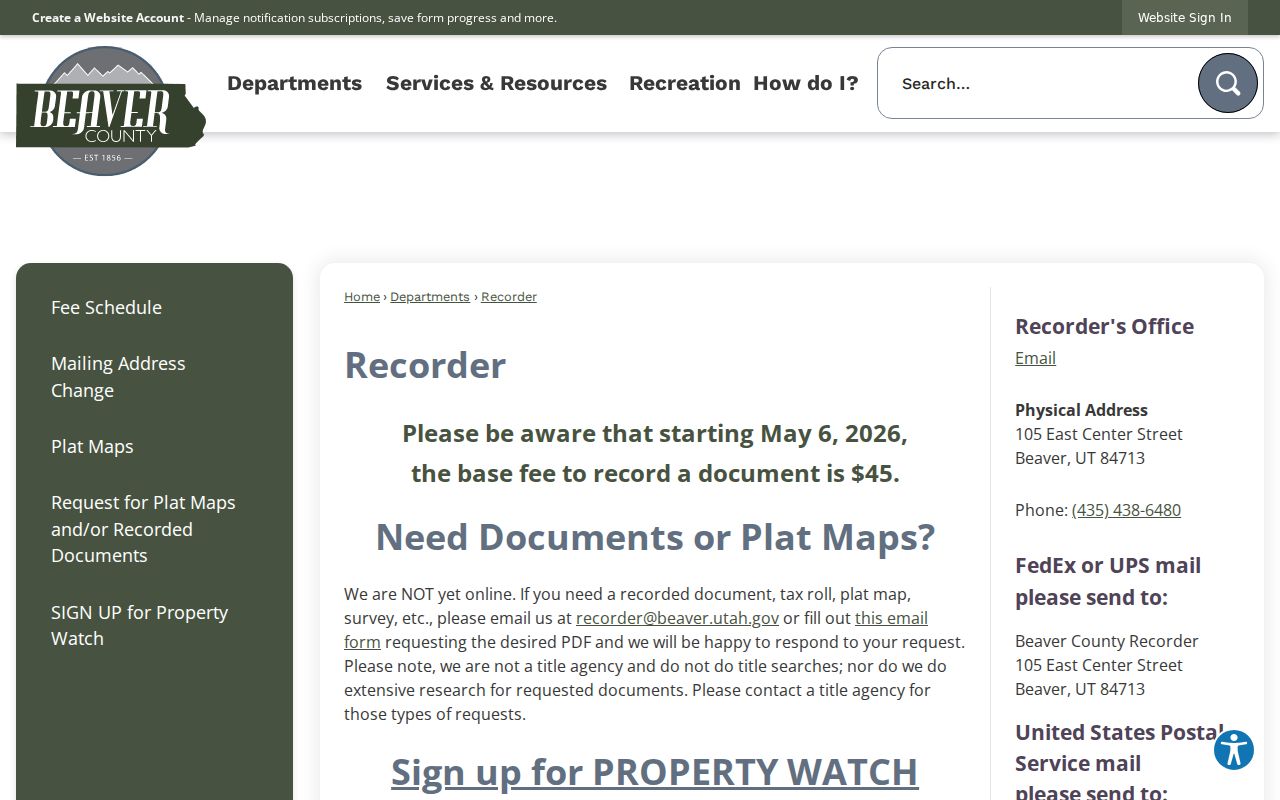
The captured page shows how to request a document, not an online chain-of-title index.
Beaver's Fire Loss Limits Early Owners
A fire destroyed Beaver land records from before the surviving late-1800s range, the Recorder warns. The exact date is unclear. So are the damaged books and any reconstruction method. A chain of title may simply stop at the earliest surviving instrument. Do not invent a cutoff year. And never assume duplicate copies survive elsewhere.
For an earlier-era owner, ask the Recorder what survives. Then search the Utah State Archives and FamilySearch catalogs for related deeds, tax books, plats, court files, or mining records. A secondary index can point toward a name, but only a source instrument supports the transfer itself. For a formal title opinion that must resolve a chain gap, use a title professional rather than asking county staff to reconstruct the whole chain.
Archives Preserve Beaver Tax Transfers
The Utah State Archives identifies Beaver County tax deeds from 1896 to 1942 and tax-sale records from 1896 to 2021. These can explain an odd transfer. A sale forced by unpaid taxes rarely reads like a normal deed. The Archives also lists civil files from 1896 to 2021, which may hold foreclosure, quiet-title, or probate material. Series dates prove nothing by themselves. The Archives finding-aid announcement names these Beaver collections.
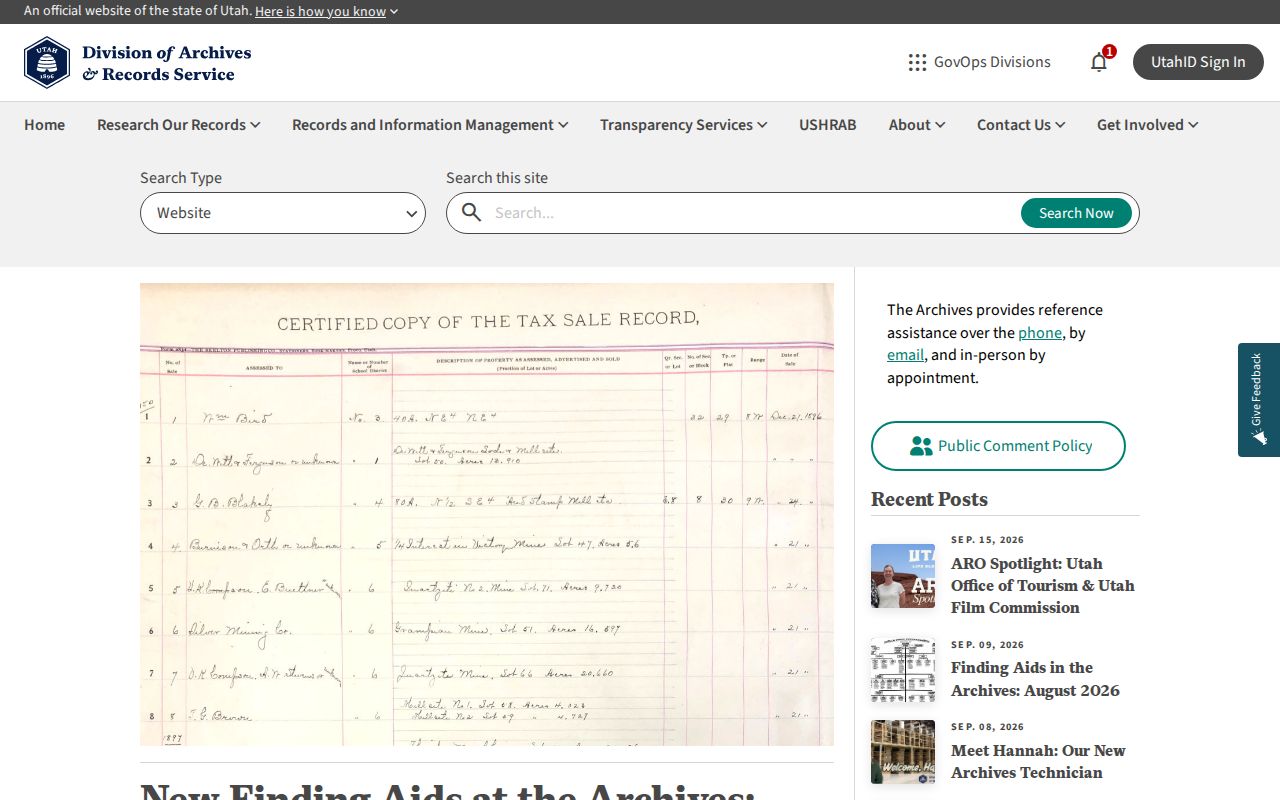
Request the series that fits; verify its legal description.
Estate Transfers Can Change the Name Trail
Not every transfer carries an ordinary deed. Beaver Recorder materials describe an affidavit of death for a joint tenant, a successor-trustee affidavit for a trust, and a personal representative's deed after probate. Each changes the name that appears in the chain. The deed or court order is the controlling record.
Utah Archives lists a public Beaver death register covering October 1881 through June 1949. Its fields include death date, name, birth date, cause, and parents' names. That builds historical context for a person. It proves nothing about owning or conveying a parcel, though. The death-register inventory explains the archive's coverage and microfilm access.
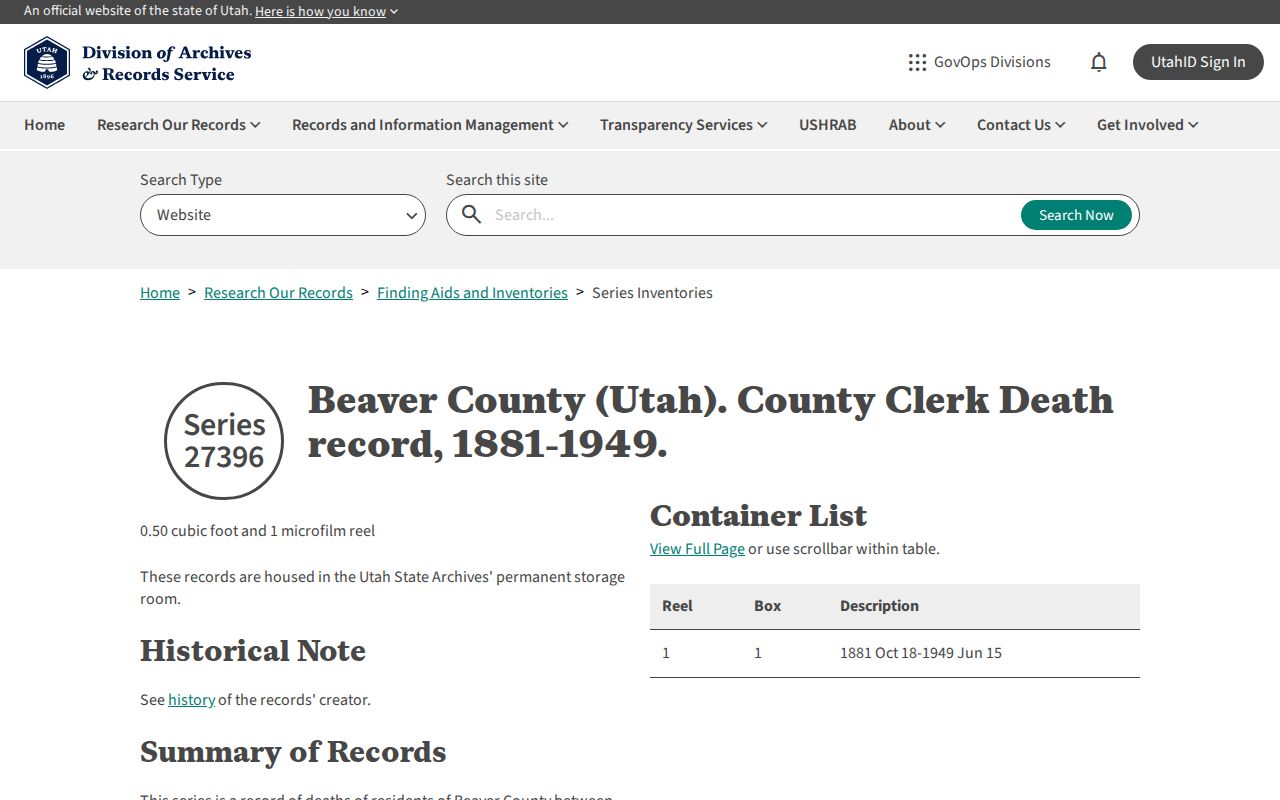
Treat vital records as a lead only. Ownership needs a deed, probate order, or tax record. The Archives also maintains a Beaver birth-register index, useful for telling apart people with similar names or building family context for a later estate search. Open the Utah State Archives' Beaver birth-register index for the series entry point.
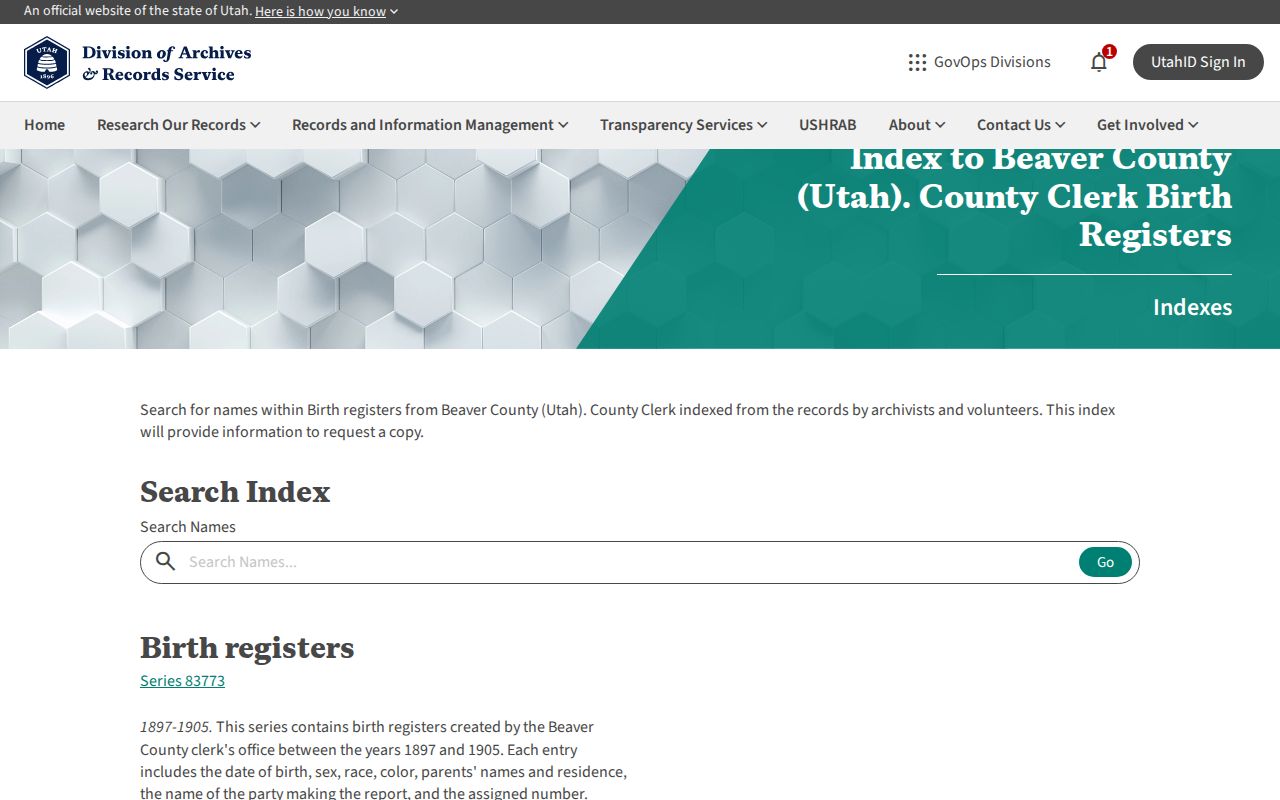
A birth index supports identity research. Property ownership still turns on a deed, estate instrument, or court record.
Mining and Water Rights Run Beside Deeds
Some historic Beaver descriptions tie a parcel to a mining claim, water right, farm parcel, or district record instead of a modern street. The Recorder can search some property and water-right information. The Utah Division of Water Rights runs a separate search by owner or water-right number. These records illuminate land use. They do not prove title, however. Keep the deed chain and the water or mining record as parallel timelines. A claim or plat may name a land user. Only the land transfer or an applicable court record establishes the ownership event itself.
Walk a Beaver Deed Chain in Reverse
Work backward. Start with the newest deed and move toward each earlier transfer, leaning on the recorded deed copy and help from Recorder staff, since Beaver County posts no grantor-grantee search online. Keep the parcel's legal description beside every name. A chain can split when a lot is subdivided, a trust is added, or an estate transfer changes the grantee.
- Start with the latest recorded deed for the parcel and write down its grantee and grantor.
- Confirm that the deed's legal description matches the current parcel.
- Ask for the prior instrument that vested the land in the latest grantor.
- Repeat until the Recorder identifies the oldest available instrument or a gap.
- Grantor
- The person or entity that conveyed an interest.
- Grantee
- The person or entity that received the interest.
- Chain of title
- The dated order of land-transfer records for a parcel.
- Legal description
- The record description that ties older deeds to the land.
- Quitclaim deed
- A transfer of whatever interest the grantor held, if any.
Historic Beaver Records Need Cross-Checks
The Archives holds more than deeds. Its listings include Beaver birth registers from 1897 to 1905. They also include incorporation case files from 1874 to 1961, plus mining records. A directory, death entry, or incorporation file can date a person, a town, or a land-use event. It can point toward another record. But it cannot prove a transfer of ownership on its own.
Note: for each former owner, write down the source, the series, and the date range. Write down exactly what the entry states. Then ask whether a matching deed, probate order, or court record survives. That habit keeps a historical clue from hardening into an unsupported claim of title.
How Far Back Beaver Ownership Records Reach
Beaver County has no online deed index. A fire destroyed some early records, the Recorder says. No exact fire date is on record, and no universal starting book is confirmed. The office describes property-history service back to 2000, while surviving county land records reach into the late 1800s. Those are different spans. Earlier ownership may need the Archives, other historic material, or a title professional.
Utah State Archives can fill part of the gap. Its Beaver series include tax deeds from 1896 to 1942, tax-sale records from 1896 to 2021, and civil case files from 1896 to 2021. A tax foreclosure or court dispute may surface there. A date range is not a promise. Not every parcel has a matching file. Search with the legal description and names drawn from a deed you already hold, then inspect the original or request a copy from its custodian.
The Archives also indexes Beaver death registers from 1881 to 1949 and birth registers from 1897 to 1905. These help separate people with similar names or flag a possible estate period. They are personal-history sources. They prove nothing about land. Only a probate case, estate deed, or recorded transfer ties the person to the parcel. Keep two Recorder claims straight, too. Parcel-history assistance goes back to 2000, while the surviving instruments themselves reach into the late nineteenth century. When requesting older material, name the period you want. Note whether a result came from a Recorder index, an original instrument, or an Archives finding aid.
If a former owner died during the period you are researching, a death-register entry or a newspaper obituary can pin down the right person. Ownership still needs a deed. A probate transfer or court record works as well. Local newspaper runs offer sale notices and old street names. Treat them as signposts. Use them to locate the source document, never to replace it. Some filings affect only part of an interest. A spouse's release, trustee affidavit, lien discharge, or easement can sit beside a deed without making that person a former fee owner. Read the legal capacity in each filing. Put the instruments in date order, and when names shorten or spellings shift, compare the parcel description and the referenced document before joining two entries as one person.
Lawful use. Use former-owner information for house history, property diligence, or estate research. Do not use a name or address to stalk, threaten, or harass a living person.