
Compare Beaver Property Value Types
Labels matter in Beaver property value records. The Assessor's market value, a taxable figure after exemption, and a last sale amount are three different numbers that should never be used in place of one another. The county's parcel-card screen and sale-price field are not shown online, so confirm with the office where each specific figure lives.
| Value | What It Is | Where |
|---|---|---|
| Assessor market value | Annual fair-market estimate for taxation | Beaver County Assessor |
| Taxable value | Value after a qualifying exemption or classification | Assessor record; verify the tax year |
| Sale price | Consideration for a particular transfer | Recorded deed; public display field not confirmed |
| Land and improvement value | Separate components in some parcel data | SGID LIR when supplied |
Utah counts each county's valuation as fair market value on January 1 of the year. A qualifying primary residence is generally taxed on 55 percent of fair market value. That follows a 45 percent exemption. The ratio does not turn the assessed number into a forecast of a sale price. A deed's stated consideration speaks only to its own transaction and date.
Beaver Assessed Value Uses January 1
Every January 1, Utah county assessors place a fair market value on locally assessed property. Beaver County's Assessor handles residential, commercial, agricultural, and vacant real property, along with greenbelt, residential declarations, reappraisal forms, and value appeals. Setting local tax rates and collecting the bill sit outside its duties. The county's Assessor information page describes the office's valuation work.
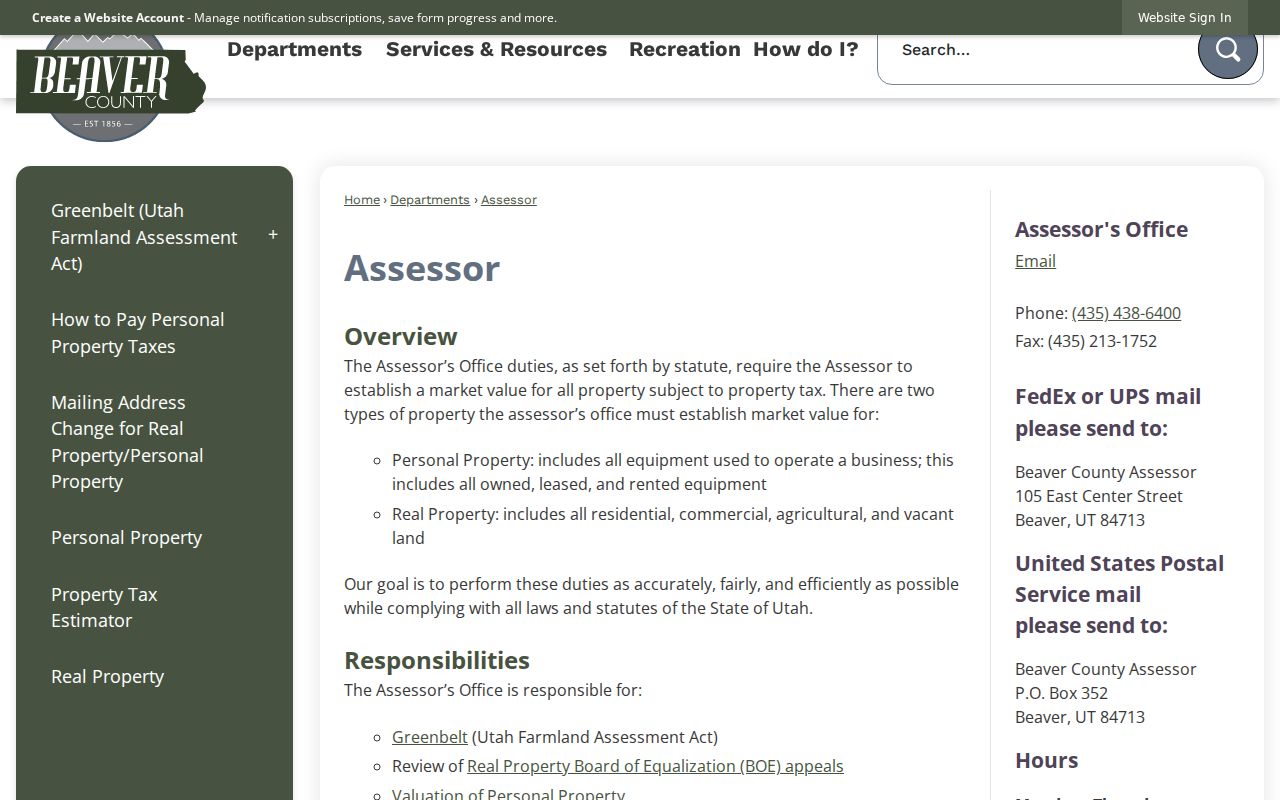
The Assessor's published material describes its valuation role rather than any individual parcel appraisal. When comparing a figure across years, keep the assessment date and tax year beside it. A sale after January 1 can be useful evidence for a later review, but it is not automatically the county's value for that earlier date.
Taxable Value Can Differ From Market Value
Utah generally exempts 45 percent of fair market value for a qualifying primary residence, leaving 55 percent taxable. This shifts the base used for tax math. The market-value estimate itself stays the same. A taxable amount can look far lower than the full assessment without telling you what the property would sell for.
Greenbelt treatment is a separate classification. Beaver's Assessor administers agricultural valuation and residential declarations. A large lot, a ranch setting, a water-right entry, or a map label does not prove a parcel qualifies for special treatment. Check the current assessment record with the county office.
The bill adds local levies and the tax district. Those details belong with the tax office, covered in the Beaver property tax records route.
SGID Separates Land and Building Traits
Beaver's SGID Land Information Record parcels can include total market value and land market value, plus acreage, property class, a primary-residence indicator, subdivision, building square footage and floors. Year-built fields appear when available. These attributes describe the parcel and its improvements. Still, the county data steward may leave a field blank. Updates may arrive on a different cycle. Open the Utah parcel data page to reach the Beaver layer.
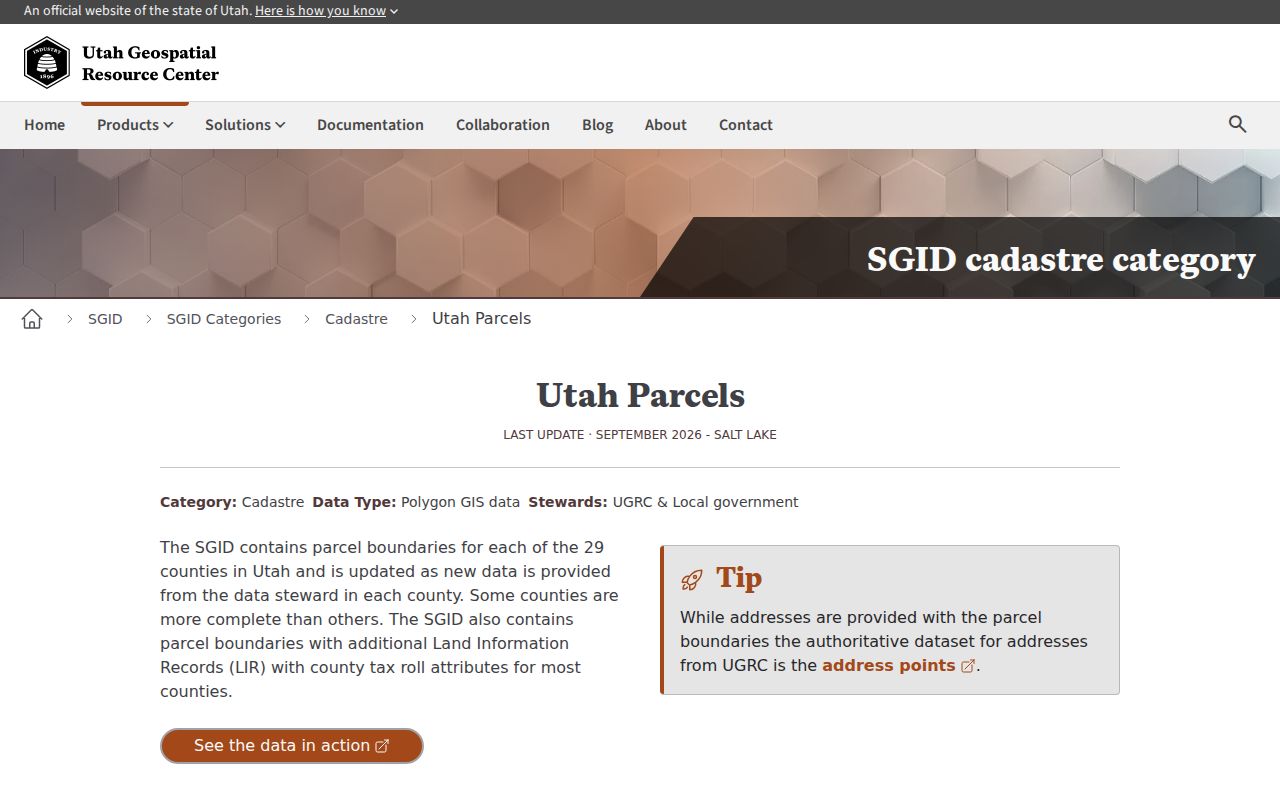
Use SGID to orient a value question, then confirm the official assessment year and figure with the Beaver Assessor. The Beaver basic parcel layer update is listed for June 2026, while the LIR data carries a 2025 update note. That gap is a reminder. Check the source date before comparing figures.
A Beaver Sale Price Is Another Number
A deed records the transfer. It may state consideration, but Beaver publishes no public sale-price field on an assessor card. The Recorder's system is not online. A deed request is the route to the recorded instrument. Never assume a sale price will appear in an online value lookup. Not every deed reports a simple cash amount.
A sale happened on a specific date and under specific terms. The assessed market value applies to a tax date. The taxable value reflects exemption rules. These numbers may differ without any of them being wrong. If an assessment is challenged, use the evidence and timing rules in the current county appeal notice. A Beaver deed record can confirm transfer details. A parcel value still comes from the Assessor.
Beaver Parcel Classes Need Context
Beaver County includes older town homes, agricultural land, vacant tracts, and mining-related history. It also holds mountain or river-valley parcels. Those traits suggest which fields to inspect. They say nothing about worth. SGID's property-class and acreage fields, when present, can frame the question. The Assessor's parcel record controls the official value and classification.
The county publishes no Beaver-specific ranking of fastest-appreciating districts or recent revaluation effects. Do not infer a trend from a city name or a subdivision label. A handful of nearby parcels says nothing either. For a formal sale or lending decision, use a licensed appraisal. Do not rely on the tax value.
Check a Beaver Property Value by Parcel
Beaver offers no public Assessor search screen online. Use the parcel ID to ask the Assessor for the value record and its effective tax year. SGID can help find a likely parcel, but it does not replace the county's own value record. The current Assessor contact is 435-438-6400.
- Find the parcel ID and parcel city in Utah SGID using the known address.
- Ask the Beaver Assessor for market value, taxable value, classification, and the tax year.
- Request a recorded deed from the Recorder if a sale-date or consideration figure matters.
- Compare only records with matching parcels and dates; ask the Assessor about any mismatch.
- Assessed or market value
- The Assessor's annual fair-market estimate for taxation.
- Taxable value
- The value after an exemption or classification is applied.
- Sale price
- Consideration in a transfer; exact public display is not confirmed.
- Reassessment
- The annual value-setting process tied to the assessment date.
Assessment Evidence Must Match the Date
Evidence only helps when it points to the right parcel and the right assessment date. That is the trap with nearby sales. The sale down the road may rest on a different land class. It may also involve a different building condition, water access, or legal description entirely.
For appeals on real property, the county Assessor is the office to contact. Utah's locally assessed guidance gives July 22 as the notice deadline. September 15 is the county board filing deadline. Remember that those dates govern an assessment appeal, not a general home-value estimate. Always follow the current notice and the official instructions for the year involved.
Do Not Read Value as a Sale Promise
The assessor's Beaver property value exists to support taxation. It comes from an annual valuation process. It is not a buyer's offer and not a full appraisal report. The figure helps with tax review, but it guarantees no sale price and cannot say what a parcel would bring under a particular contract.
What Beaver Property Value Cannot Prove
A Beaver assessment does not prove what a buyer will pay, what a boundary measures, or whether a deed chain is clear. A tax value is one number maintained for one purpose. Check a deed for transfer terms and a survey for boundary placement.
The Assessor establishes market value annually as of January 1. The figure is an estimate for assessment purposes, not proof that a parcel sold for that amount or would sell for it later. When comparing properties, match the assessment year and property class, then consider acreage, building area, condition, access, and other recorded characteristics. A rural parcel with water or agricultural features may not be comparable to a small town lot even when their displayed values are close.
For an appeal, compare the notice with the parcel's features and submit evidence tied to the valuation date. Beaver's appeal path includes the county board of equalization; Utah's locally assessed guidance gives July 22 for valuation notices and September 15 for a board filing. Confirm the current dates and filing requirements on the notice. Exemption, greenbelt, and classification questions belong with the Assessor, while a tax-rate concern goes to the taxing entity.
A qualifying Utah primary residence generally receives a 45 percent exemption, leaving 55 percent of market value taxable. That treatment changes the taxable base, not the market-value estimate. Keep market value, taxable value, levy, and final bill as distinct figures when explaining the difference between an assessment and an amount due.
Agricultural greenbelt treatment is another separate valuation track. Eligibility depends on qualifying use and a declaration, so an agricultural appearance on a map does not establish that the parcel qualifies. The county Assessor's office can explain what documentation applies to the requested year. SGID may expose acreage, property class, land value, total value, and building attributes, but field availability and freshness can vary; confirm the official assessment before relying on a number.
Value vs price. The Beaver Assessor's figure is for taxation, not a sale appraisal. For a transaction or lending decision, use a licensed appraiser and current market evidence.