
The Beaver Owner-of-Record Card
Beaver County publishes no confirmed owner-of-record card. The fields below mark what to verify and where. The Assessor handles valuation and greenbelt records. The Recorder's FAQ states that the deed's grantee line identifies the owner or owners of record. Treat this checklist as a guide, not a live Assessor screen.
| Grantee or owner name | Read on the latest recorded deed; Assessor card not publicly captured |
|---|---|
| Vesting | Read the deed terms for joint, trust, company, or estate ownership |
| Mailing address | Notice destination; may be a PO box or outside the county |
| Situs or parcel address | Physical location or map address, separate from owner mail |
| Parcel ID and legal description | Cross-check the deed's land with the map |
| Recorded date | Use the newest instrument date available from the Recorder |
The owner and the occupant can differ. Mailing data may point to a representative, trust, lender, or post office box. A deed shows an ownership interest, not residency.
Beaver Assessor Shows Value, Not a Search Screen
The Beaver County Assessor sets annual market value for residential, commercial, agricultural, and vacant property. The office also handles greenbelt, declarations, and board-of-equalization matters. No owner search appears there. That leaves the current-owner field and refresh timing unconfirmed. Call 435-438-6400 to ask directly. The Assessor's official office page lists its contact routes and can point to the record that names each parcel's owner.
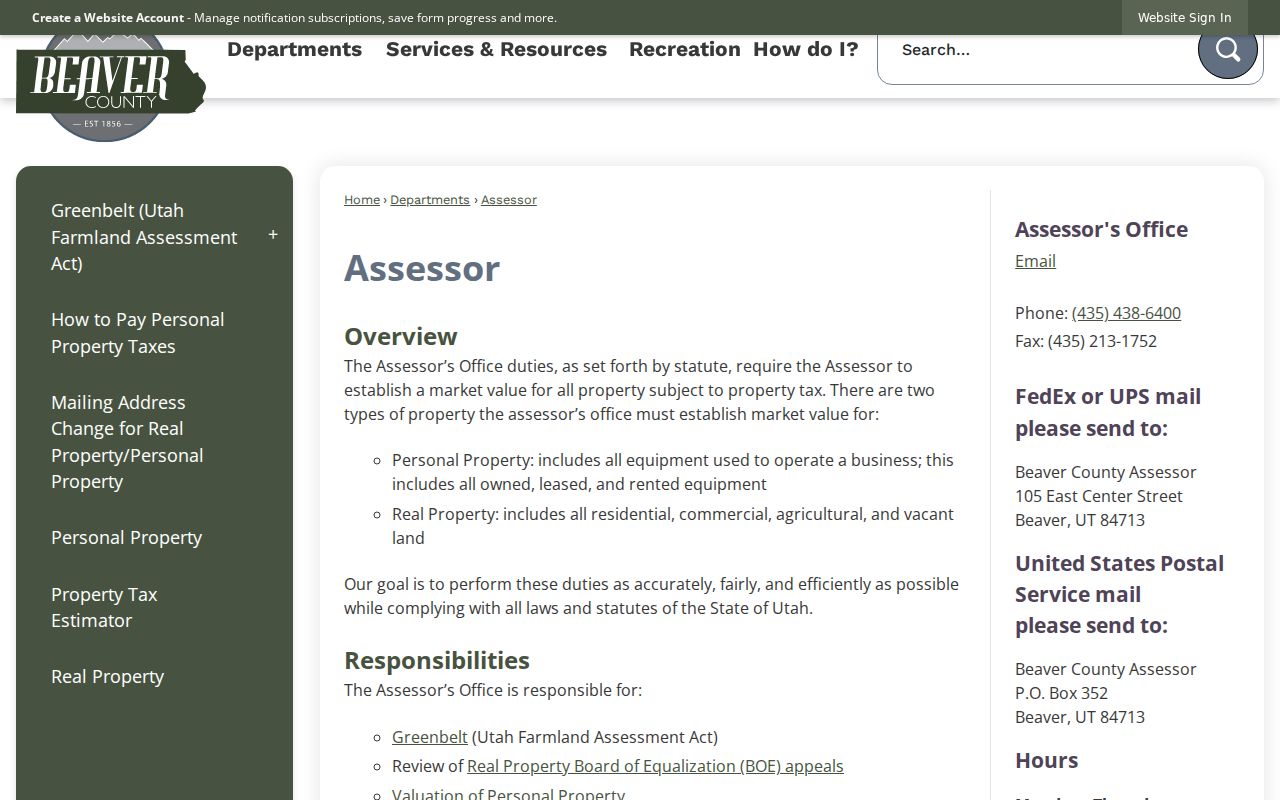
This capture documents the Assessor's role, not an owner card or online search.
Beaver's Latest Deed Is the Transfer Check
The Recorder keeps Beaver's deed records. Its land-record system is not online. The office can locate ownership for a parcel when you ask, and a request works best with the parcel ID, an owner name, an address, or a legal description. Ask for the latest deed. Read the grantee line and match the legal description to the parcel before accepting the name as the current owner. The Recorder's public page carries the document-request form, email route, contact details, and Property Watch information.
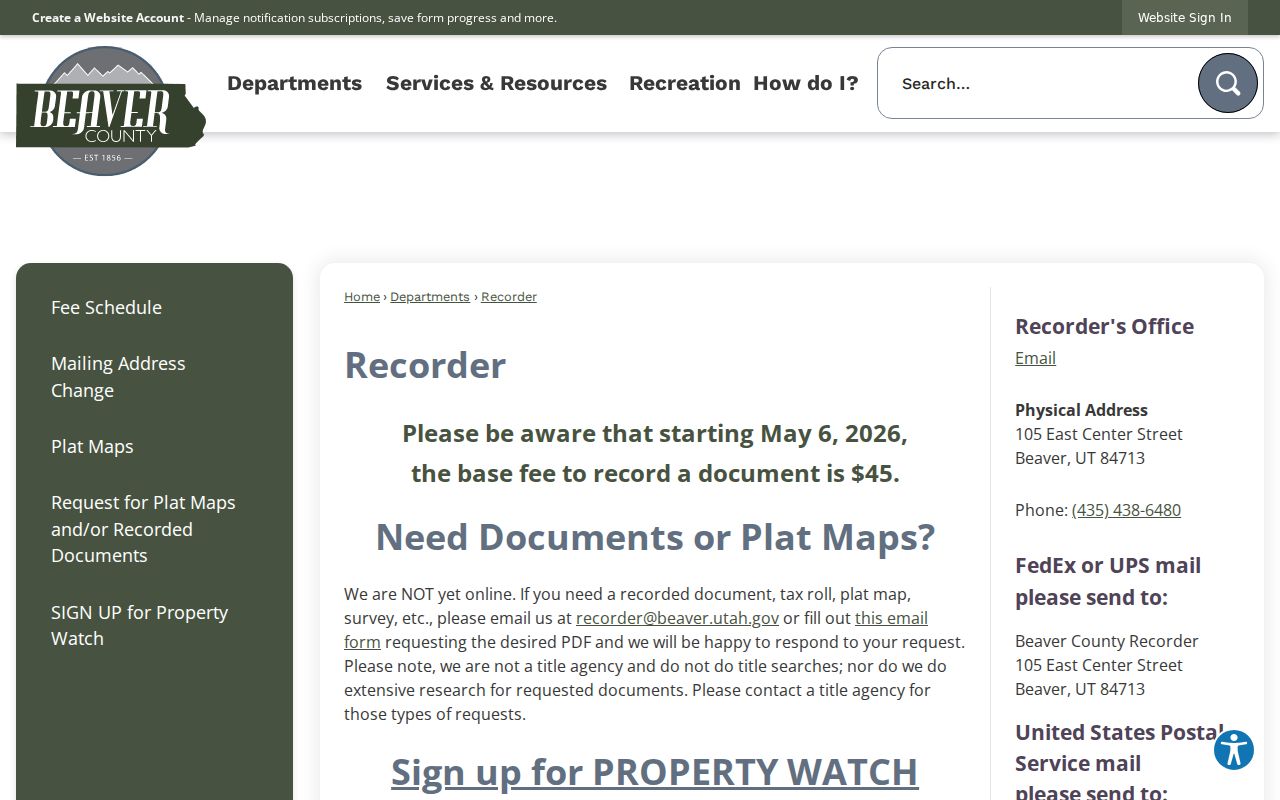
The Recorder does not provide extensive title research.
Beaver Roll Timing Is Not Published
Beaver County publishes no update schedule. Neither a closing-to-roll lag nor an online refresh date appears in public materials. A recent transfer can show on the recorded deed before it reaches an assessment notice or parcel layer. The latest recording date is the anchor. Still, no single public record works as a real-time guarantee. Ask the Recorder for the newest recorded instrument. Ask the Assessor what date its ownership information reflects. Keep the tax year, notice date, and deed recording date as separate notes, which gives a clear basis for the next question without inventing a countywide delay.
Confirm a Beaver Owner in Two Records
Use two records. The Assessor sets annual value, though its public owner-search interface is unconfirmed. The Recorder can provide the recorded transfer. For the full address-to-owner method, the Beaver ownership lookup steps explain the parcel-first route.
- Identify the parcel ID, situs address, and legal description in SGID or a county map.
- Ask the Assessor what current owner information it can confirm for that parcel.
- Request the latest recorded deed from the Recorder and check the grantee and vesting terms.
- Compare the recording date with the assessment notice year and keep the mailing address separate.
- Owner of record
- The person or entity named in the relevant assessment or recorded instrument.
- Vesting
- The way ownership is held, such as joint ownership, trust, or company.
- Situs address
- The property location, which can differ from the notice address.
- Recording date
- The date the land instrument enters the county record.
Beaver Mailing Data Is Not Occupancy
A Beaver tax mailing address can belong to a trust, a manager, a lender, or an out-of-area representative. It does not show who lives there. Keep mail and situs separate. Each official record serves its own purpose. Utah's public-record rules also protect certain personal details. Voter records can carry an At-Risk classification, and vital records follow direct-interest rules for current certificates. Those files do not turn a property lookup into a way to locate an occupant.
Beaver Trusts and Estates Name a Role
A Beaver deed may name joint tenants, a trustee, a company, or a personal representative. Roles matter more than names. The Recorder's FAQ lists a successor trustee affidavit, affidavit of death, or personal representative's deed as part of a transfer after a death or trust change. Read the instrument and its legal description before assuming one individual owns the land.
Utah's business-entity search covers LLCs and corporations. It supplies filing status and public agent information. A registered agent receives legal notices, which is not proof of ownership. Probate questions may point to Fifth District case information or the recorded estate deed.
A Beaver deed-record check is the right route. Use it when the vesting language itself needs review.
Property Watch Tracks New Filings
The Beaver County Recorder offers Property Watch. It is an email alert service for activity affecting a registered parcel. The public page does not show the signup fields. It also does not promise alerts for every event. Ask the Recorder how to register a parcel and which activity produces a message. An alert can prompt you to check a new instrument, but it is not a title guarantee or the official deed copy. Confirm any notice with the Recorder before acting.
Limits of the Beaver Current Owner Record
The current owner record answers a narrow question: who is named as grantee by an official Beaver County office. It says nothing about occupancy. It cannot guarantee clear title or settle a boundary dispute. A trust or business entity may hold the parcel. Its own filings are sometimes needed to understand the role it actually plays.
Timing explains most odd mismatches. A deed's recording date can land at one point in the year. The closing date, the date an assessment account switches, and the date a tax notice is printed can land at others. The county publishes no guaranteed update interval for each parcel record. So a recent conveyance may be missing from a valuation or billing entry. Ask which record is current. Lean on the recorded instrument for its filing date.
To confirm a deed belongs to the right property, match the grantor and grantee names. Also match the parcel description and the recording reference. A company or trust can hold title through a representative. A personal representative may appear only in a limited legal capacity. Where vesting language, liens, or multiple interests get tangled, have a title professional review the chain instead of trusting a quick name match.
Beaver County offers Property Watch email alerts for activity affecting a registered parcel. Ask the Recorder how enrollment works and which filings trigger a notice. An alert is a nudge, not a database. It does not replace an official deed copy, and it is no guarantee that every change will be caught.
The Recorder accepts requests by email, form, phone, mail, and at the counter. Its public page states the deed index is not online. Give the parcel or tax ID and the legal description when you can. You may only have an address. Add the city and a rough transfer period so staff can locate the right land record.
Copies carry a cost. A regular document copy runs $1 per page or PDF, and a certified copy runs $5 per page. Fees change, and a long ownership chain may span many pages. Ask for the current estimate, and decide whether your lookup actually needs certification.
The Assessor sets market value and can field questions about assessment attributes, though it publishes no public owner-and-address lookup screen. A value record can still match a parcel when it carries a consistent identifier or legal description. Do not assume the taxpayer's mailing name is the grantee on the latest deed. When the owner of record is the real question, never substitute the assessment for the recorded transfer.
Office staff list hours as Monday through Thursday, 8 a.m. to 5 p.m., and Friday, 8 a.m. to noon. The Recorder sits at 105 E Center Street in Beaver, with mail to PO Box 431, Beaver, Utah 84713, and phone 435-438-6480. Check the live county page before traveling or mailing a request, since schedules and fees shift over time.
Lawful use. Use Beaver owner information for property matters and due diligence. Do not use a name or mailing address to stalk, threaten, or harass anyone.