
Start a Beaver Property Records Search
A Beaver property search works best as a chain, not one screen. Hold the street address loosely. A map or tax notice may reveal a parcel ID or legal description worth adding. The county Recorder can locate ownership, deeds, plats, surveys, and some tax-roll material on request. The Assessor sets market value, and the county GIS office and Utah SGID supply spatial layers. The county offers no public owner-and-address search interface, so treat the map as a way to identify a parcel rather than a promise of a full record card.
Match each source to its job. A deed records a transfer. An assessment record supports taxation. A parcel polygon orients a search. A permit file may reveal regulated work. No single record proves clear title, a surveyed boundary, or who lives at an address.
- Pin down the site in the Utah SGID parcel layer with the best address clue you have.
- Write down the parcel ID, parcel city, acreage, subdivision field, and any legal-description details shown.
- Ask the Beaver County Recorder for the deed or plat by parcel key, owner name, and lot or block if known.
- Contact the Assessor for value or greenbelt records and the treasurer or auditor for tax-bill status.
- Use the county GIS, permit office, court, or Archives only for the separate question each record can answer.
This route avoids one common dead end: the assumption that an address works in every system. Rural parcels, renamed streets, mailing-city labels, and old legal descriptions can all point to different search keys. Keep each one in your notes.
Who Keeps Beaver County Property Records
Beaver County keeps the core land records. Its Recorder is the contact point for deeds, liens, plats, surveys, parcel histories, and recorded documents. The office is not yet online, does not act as a title agency, and will not perform extensive title research. The Assessor handles valuation, greenbelt, declarations, and board-of-equalization work. Tax bills, payments, delinquency, rates, and relief fall to the treasurer or auditor. GIS staff maintain the county's spatial data and maps.
Beaver County Recorder
105 East Center Street, Beaver, UT 84713
Mail: P.O. Box 431
435-438-6480
Beaver County Assessor
105 East Center Street, Beaver, UT 84713
Mail: P.O. Box 352
435-438-6400
Tax bill and payment records
Ask Beaver County's treasurer or auditor
The public tax-search URL was not located
Beaver Deeds Start With a Request
Beaver County publishes no deed-index page for searching by grantor or grantee. The Recorder takes requests by email, form, phone, mail, and counter service. Send a focused request with the address. Include any parcel ID, owner name, lot and block, or section-township-range detail. Name the instrument, deed reference, parcel history, or plat you need. Remember that the office is not a title agency. It will not build an extensive title chain for a requester.
The office sits at 105 East Center Street. Standard hours run Monday through Thursday, 8 a.m. to 5 p.m. Friday hours are 8 a.m. to noon. Recording cutoffs come earlier on Friday, before 11:30 a.m. The cutoff also comes earlier on the last business day of the month, before 4 p.m. Those deadlines govern filing, not copy requests, but they matter when a document must be recorded promptly.
Copy fees follow the county schedule. A letter-size document costs $1 per page or PDF, with certified copies at $5 per page. Recording a document runs $45 for up to ten legal descriptions, plus $2 for each additional one. A subdivision costs $55 plus $2 per lot. Check the current Recorder fee schedule before sending payment.
The Beaver County Recorder page displays the request path and the county's Property Watch service. There you can reach the document request form and sign-up details.
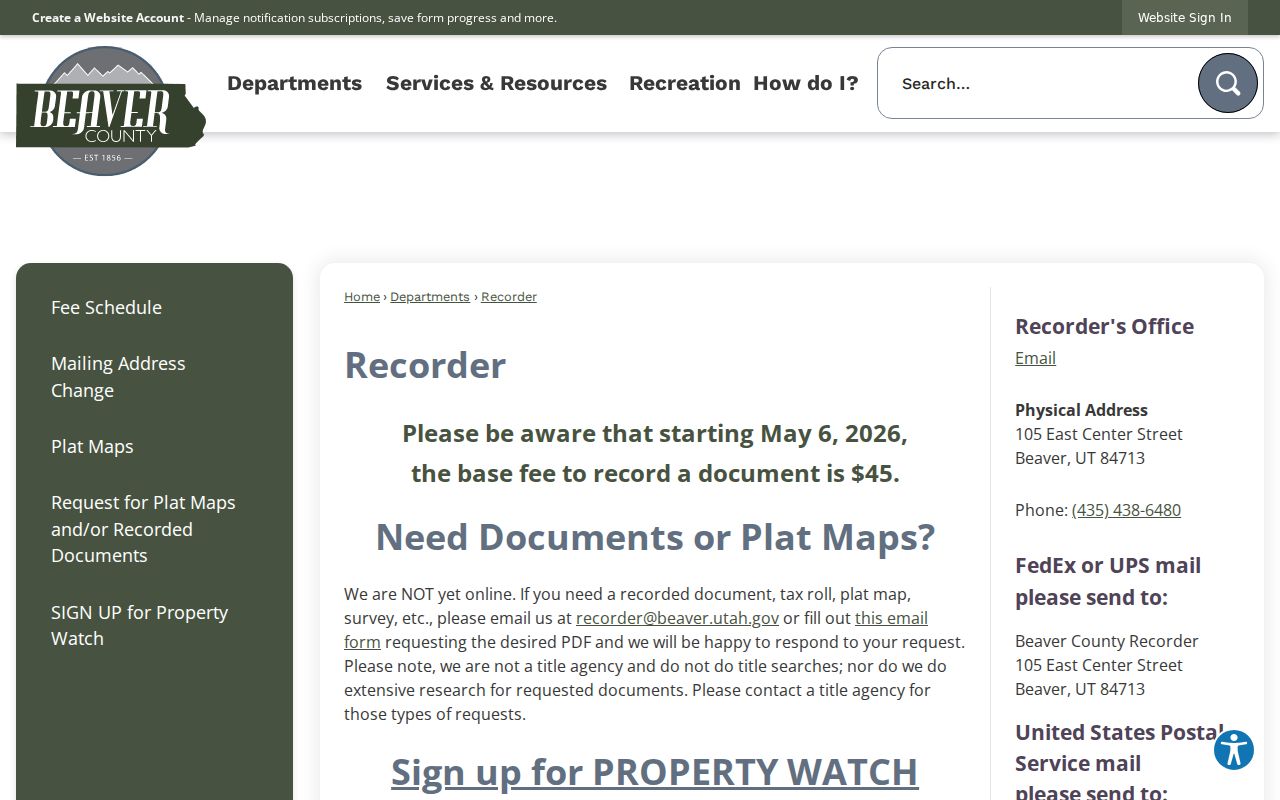
Property Watch sends email alerts when activity affects a registered parcel. The county does not publish its exact signup fields, so ask the Recorder what information a registration requires.
Assessed Value Is Set Each Year
The Beaver County Assessor values residential, commercial, agricultural, and vacant real property every year. Utah treats valuation as a fair-market exercise. The date of value is January 1. Setting tax rates is not the Assessor's job, and neither is collecting payments. A tax bill blends assessed and taxable values with levies from many taxing entities, so no single office answers every question about value and payment.
Primary residences get a break. Utah generally exempts 45 percent of fair market value, leaving 55 percent taxable. Greenbelt farmland follows separate rules of its own. The Assessor lists valuation duties, greenbelt material, residential declarations, and appeal information, but it publishes no public owner-and-address search or parcel-card screen. Ask the office directly what current property records it can release.
The state SGID layer may show total and land market value for a parcel, plus property class, tax exemption type, tax district, and a primary-residence flag. Treat those fields as orientation. County data feeds vary. A value in a state GIS map is neither a sale quote nor a certified appraisal.
The Beaver County Assessor page outlines the office's valuation and greenbelt duties.
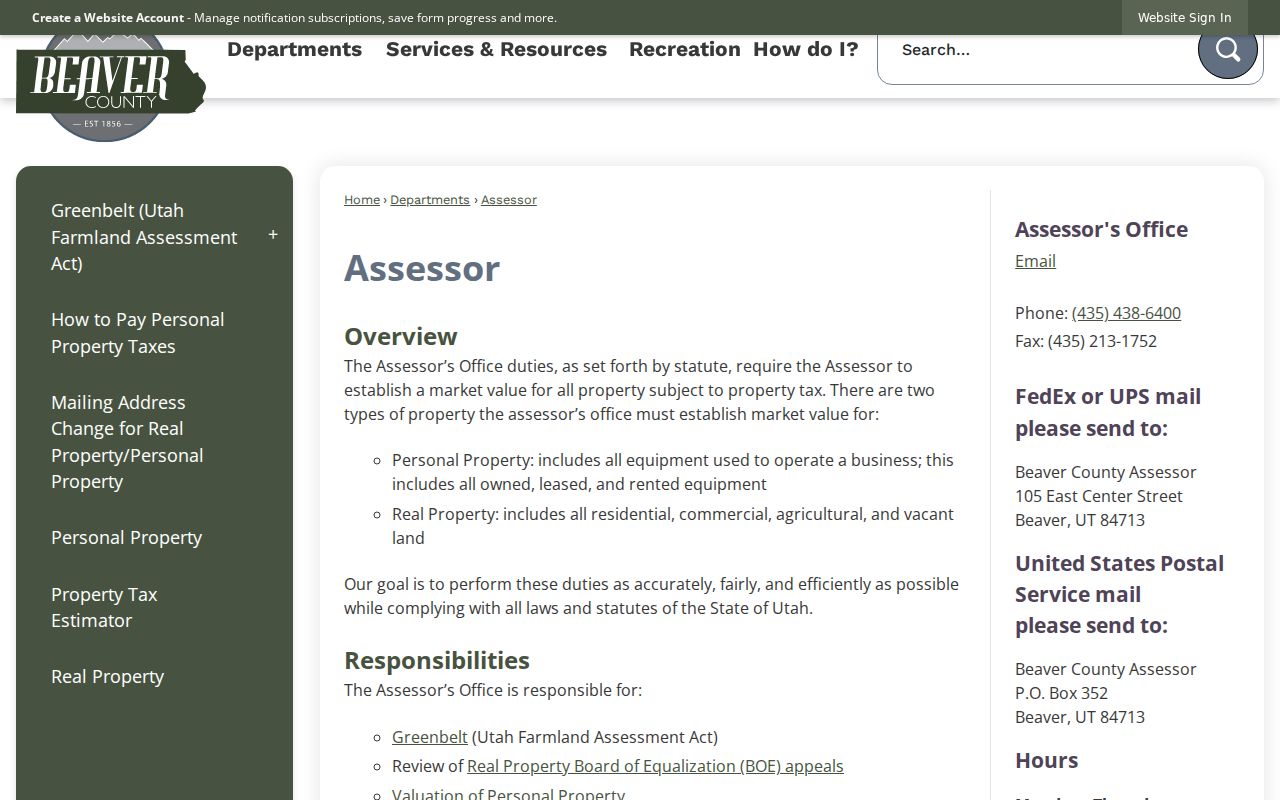
Treat the page as an office guide, then contact the Assessor to confirm a specific parcel's current owner of record and assessment details.
Appeals and Tax Bills Follow Separate Paths
Utah's locally assessed property guidance ties value to January 1. The state appeal calendar sets a July 22 deadline tied to the valuation notice. September 15 is the deadline for an appeal to the county board of equalization. The Beaver County Board of Equalization phone in the state publication is 435-438-6465. Follow the appeal instructions for the current tax year. Keep the notice date, parcel ID, and evidence of comparable sales or property condition handy.
Paying taxes is a separate matter. Beaver's treasurer or auditor handles the amount due, payment history, tax relief, and delinquency status. Beaver County publishes no online bill search, so a property page should not promise one. Utah's statewide guidance says taxes become delinquent after November 30. The stated penalty is 2.5 percent or $10, whichever is greater. A reduced penalty may apply when payment arrives by January 31. Interest can follow after January 1 of the next year.
Archives add a historic view that a current bill cannot. Beaver County tax deeds are listed for 1896 to 1942. Tax-sale records run from 1896 to 2021. Those finding aids say nothing about a parcel's current tax status. For a modern balance or redemption question, ask the current county custodian.
Utah SGID Shows Beaver Parcels
Utah's SGID comes from the state Geospatial Resource Center. It offers the clearest online parcel view for Beaver, through a basic parcel service and a Land Information Record layer. Each can draw a parcel polygon. Where counties supply the data, the layers also carry a parcel ID, serial number, address, parcel city, and tax district. They add land and total market values, acreage, property class, primary-residence flag, subdivision name, and building details. Basic Beaver parcels carry a June 2026 update note. The LIR layer shows a 2025 update.
Address points remain the authoritative state address layer. A parcel's address may date to recordation. The city label can be a mailing or situs clue rather than a municipal-boundary ruling. Layer completeness also varies by county. For a rural address, keep the address, parcel city, ZIP, APN, and legal description as separate clues.
The screenshot traces the public Beaver parcel-data route on the Utah SGID parcels page. Use it before calling the county. A parcel polygon is often enough to anchor the next question in a property search.
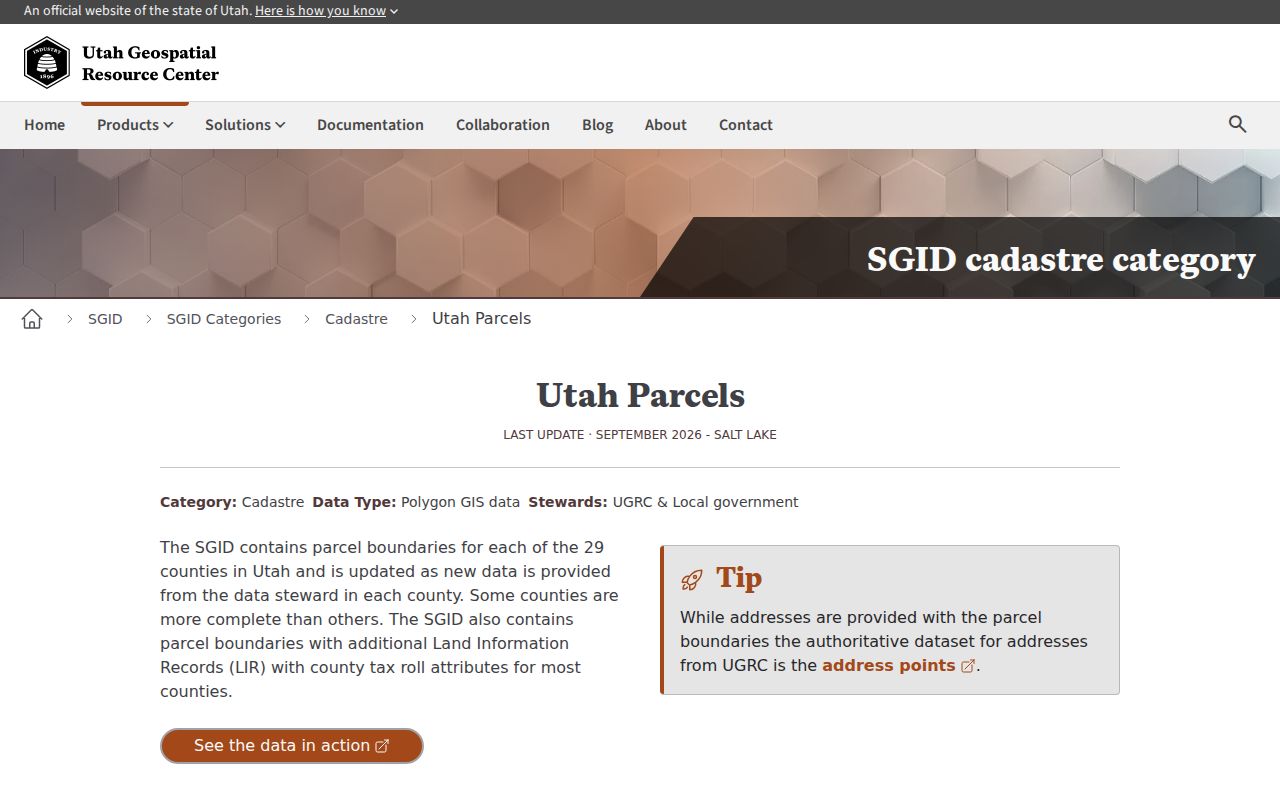
Orient with the state layer first. For the controlling legal map and record, ask Beaver County GIS or the Recorder, since the state layer is only a starting point for parcel questions.
Parcel Prefixes Route Permit Work
The first two digits of a Beaver County parcel number help route building questions. Prefixes 01 and 02 mean unincorporated county land. Prefix 03 points to Beaver City. Prefix 04 points to Minersville. Prefix 05 points to Milford. Copy the full ID exactly from an official map or record. The suffix format is not published. The prefix signals which office plays a role. It does not prove a parcel sits inside a city limit.
Permit duties split by jurisdiction. Beaver City handles zoning, application, and inspection scheduling through City Inspect. Payment goes in person at the city. Beaver County performs inspections under contract. Minersville handles zoning while the county handles application, payment, and inspections. Milford handles zoning and payment while the county handles application and inspection. Confirm the route before sending any form or fee.
County building permits cover several kinds of work. These include additions, reroofs, basement finishes, and garage changes. Demolitions, electrical and plumbing work, and heating equipment are also covered. Complete applications are usually approved within 14 business days. The county requests 24 hours' notice for inspections. A Monday inspection needs a Friday call. Trade permits are listed at $75.75, while building permit fees vary by project.
Open the county permit-routing page to see how prefix and city duties fit together.
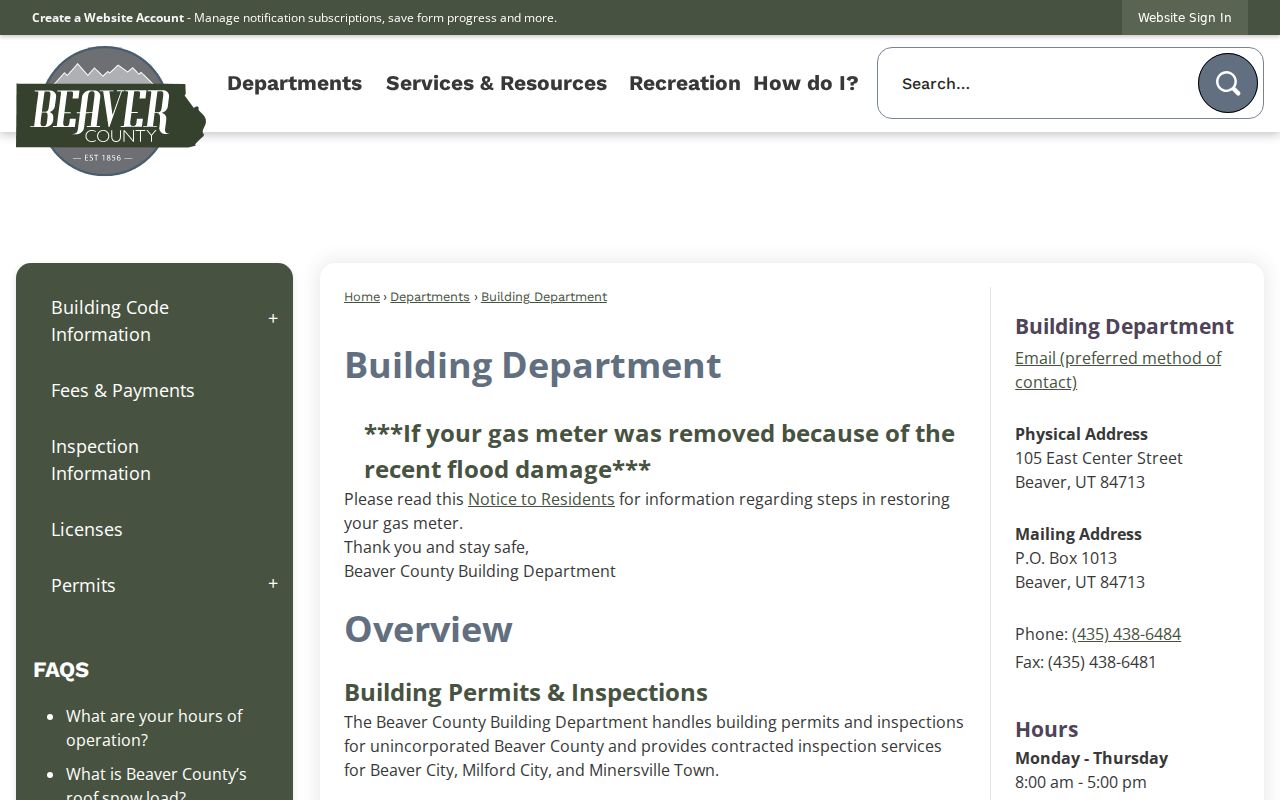
The permit-routing image helps place a request. The actual permit file for a parcel still comes from whichever office holds jurisdiction.
Building Files Add a House History
Permit files add dates a deed never carries. Beaver County lists applications for new buildings, additions, patio covers, pools, basement work, reroofs, garage conversions, stucco, change of use, moving or demolition, fireplaces, water heaters, plumbing, irrigation, electrical service, and rewiring. Some applications include a plot plan or drawings. Those sheets can show proposed structures, property lines, roads, creeks, utility lines, and well locations. Treat them as leads. No parcel is guaranteed a full file set.
The county posts online forms for building, trade, owner-builder, and clearance permits. Pay by mail or card by phone. A bank fee applies to card payments. Building fees vary with square footage, materials, labor, and use. Emergency equipment repairs require an application by the next business day. A permit is invalid until the fee is paid.
The county permit page links the forms and the process, and its payment page lists current county methods and fees.
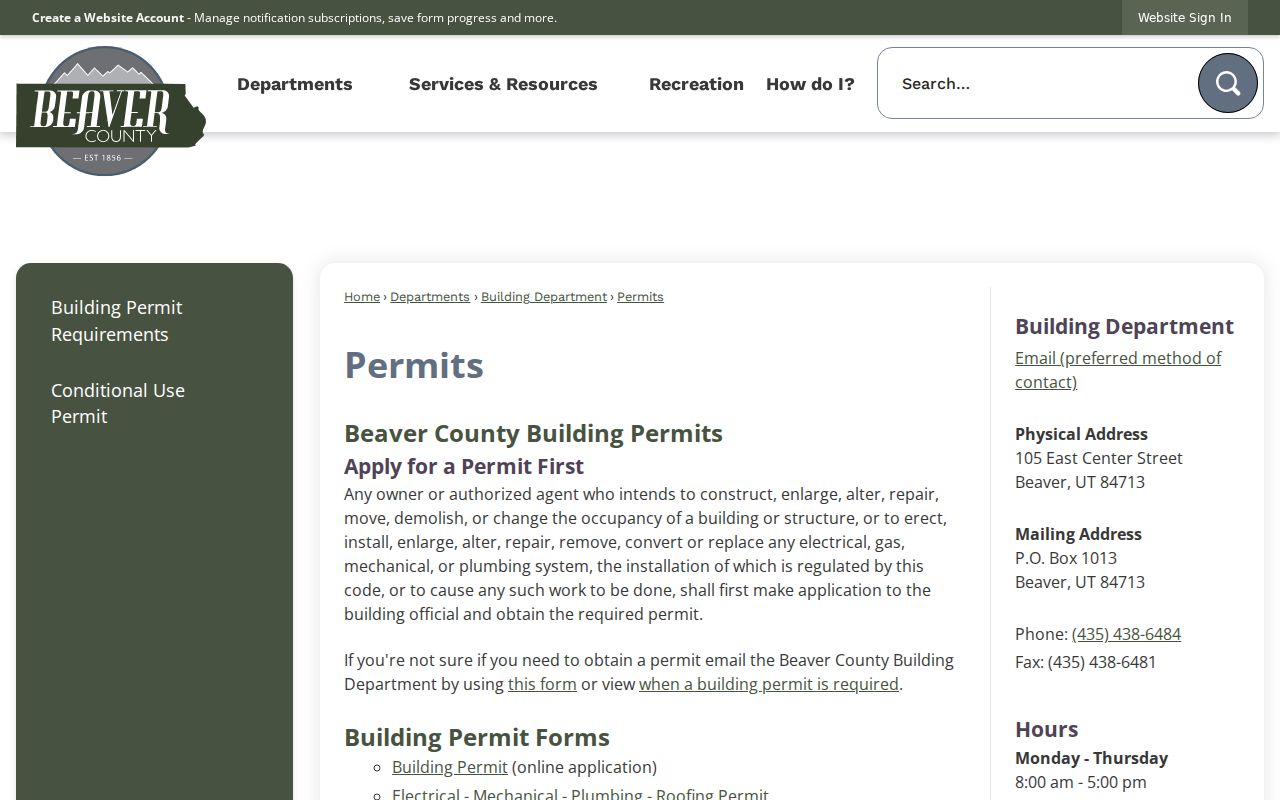
Ask about one address and time span. The forms page is not a searchable permit history. The county's fees and payments page shows the current permit fee and payment information.
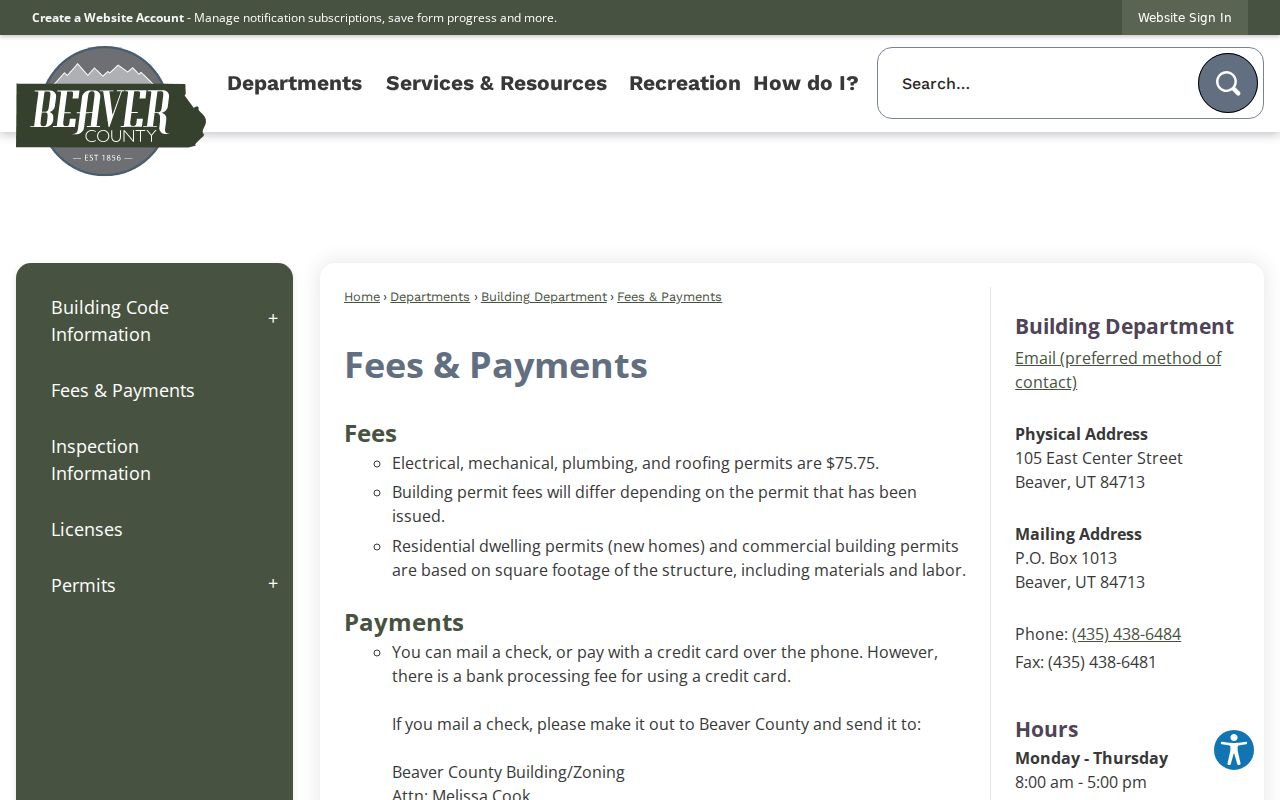
Confirm the live fee for the right office, and its payment steps, before sending any application or money.
Courts and Archives Fill Older Gaps
Court files can hold the story behind a parcel. Foreclosure, quiet title, partition, and lien enforcement all leave dockets in Beaver County. So do easement fights, deed disputes, and probate transfers. Utah Courts Xchange makes public case information viewable through guest, account, and paid routes. Not every filter is obvious, though. Don't count on a parcel-number search until you try the live system. Start with the names printed on the deed or case papers. Then ask the Fifth District clerk for copies. The Beaver copy desk takes requests at 435-438-5309 or beavercopies@utcourts.gov.
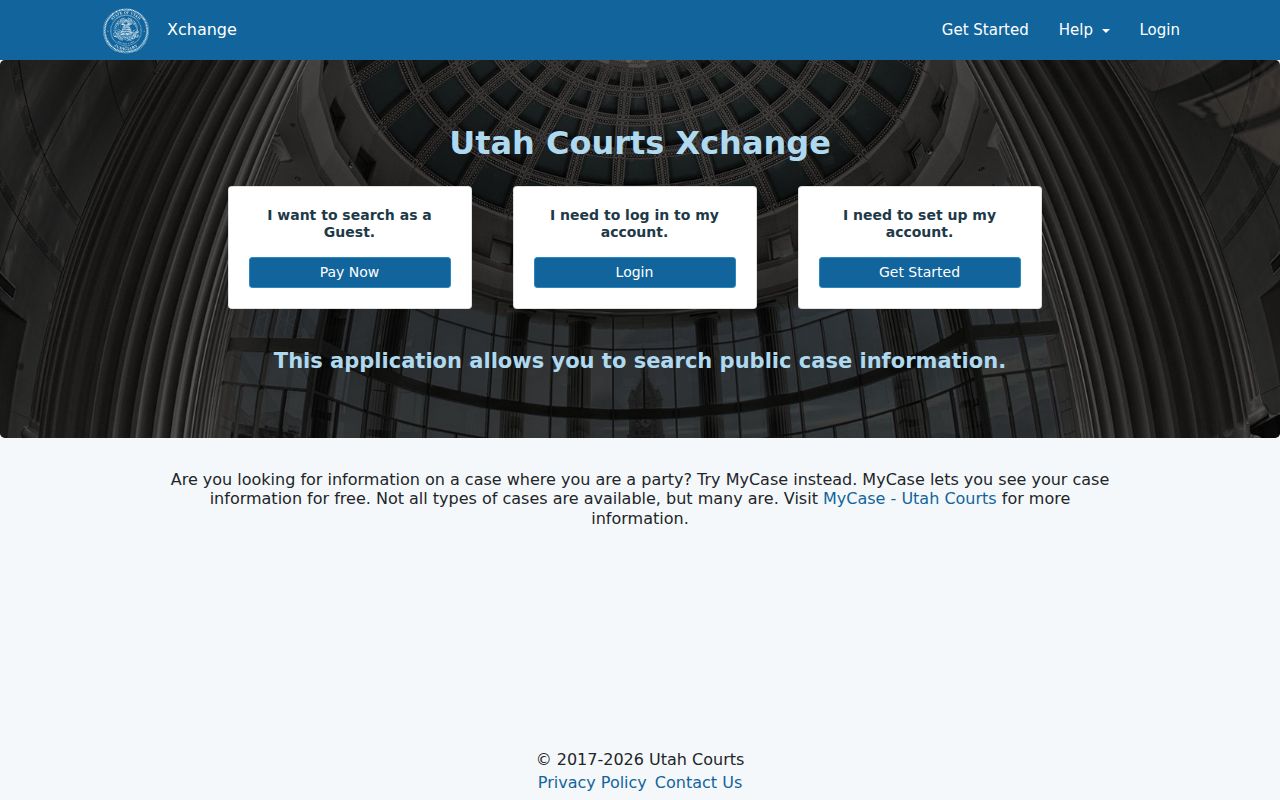
A docket records the dispute or order itself. The deed or release recorded afterward is a separate land record, so chase both. For older Beaver matters, the State Archives holds civil files from 1896 to 2021, tax deeds from 1896 to 1942, and tax-sale records from 1896 to 2021. An old tax-deed entry can explain how a parcel changed hands decades back. It won't stand in for a current deed or a full title review. The finding-aid catalog announcement lists these Beaver series.
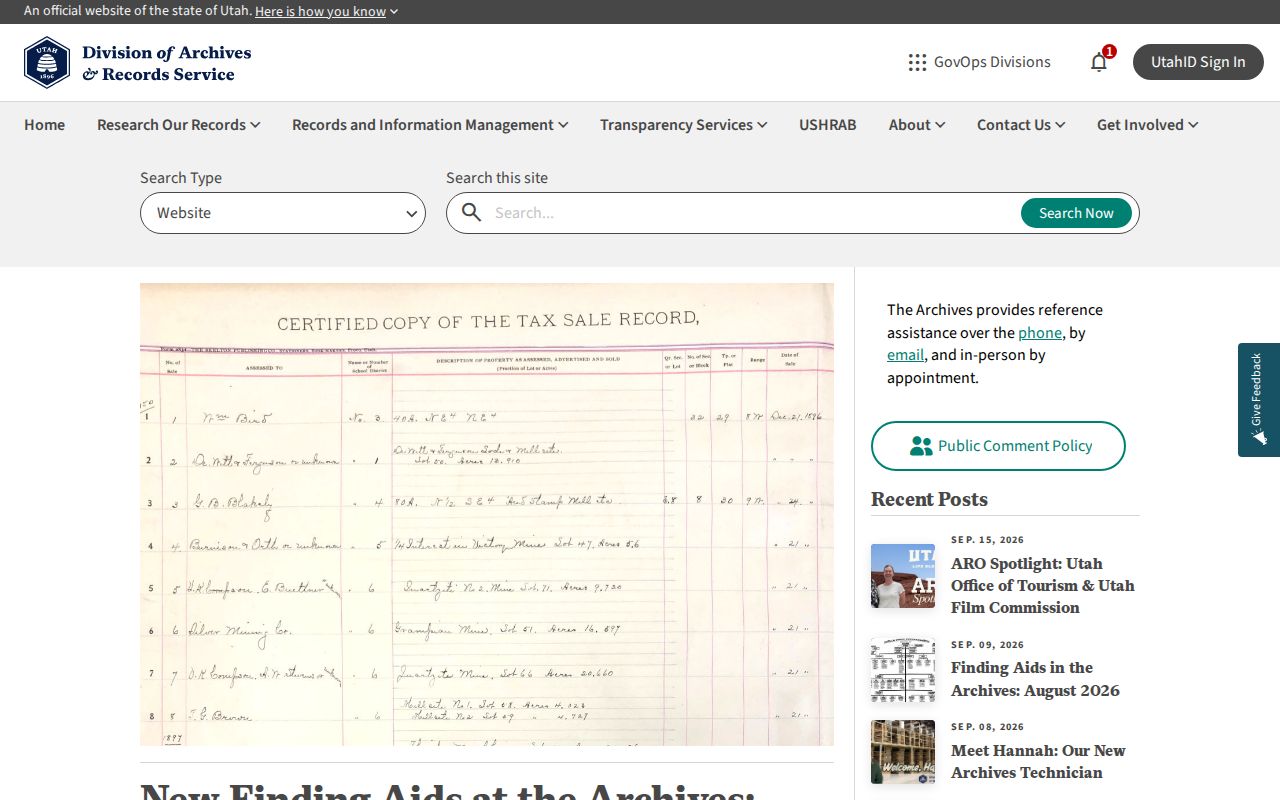
Check with the Archives before relying on a finding-aid date range as a complete chain. Ask about series details and any access conditions first.
Record Types Behind Beaver Property Records
Not every Beaver property record answers the same question. Each record type has its own custodian, its own access path, and in some spots no confirmed public online search at all.
| Record Type | What It Documents | Kept By | Access |
|---|---|---|---|
| Deeds and liens | Transfers, mortgages, releases, easements, and tax liens | Beaver County Recorder | Request by email, form, phone, mail, or counter |
| Assessment | Annual market value, greenbelt, and appeal details | Beaver County Assessor | Office page and direct contact; search screen not confirmed |
| Tax bill | Amount due, payment, delinquency, and tax relief | County treasurer or auditor | Current public bill portal not located |
| Parcel and plat | Map geometry, parcel ID, attributes, lot and block | County GIS, UGRC, Recorder | SGID online; recorded plat by request |
| Permit and zoning | Applications, regulated work, and planning designation | County or city by parcel prefix | County forms; city workflows differ |
Utah's Government Records Access and Management Act is known as GRAMA. It sets the rules for requests to public custodians. A record sitting in a government office is not automatically public in full. Statutory classifications and privacy protections can limit what gets released. So describe the record and parcel plainly. Ask the office how to submit the request. Confirm any copy charge and the expected response process before ordering. A refusal or redaction dispute belongs with the custodian. It is handled through the public-records process, not a map layer or private search result.
Match the route to the question. For transfers, liens, and recorded plats, use Beaver deed records. For annual value, tax relief, bills, and appeals, take the property tax records route. Map and permit records stay separate. Any single office may hold only part of the answer.
Limits of Beaver Property Records
Beaver property records tell you what a county office recorded, assessed, mapped, or permitted. A tax notice shows a value and a taxing district. A deed names a grantee. SGID draws the parcel polygon with its listed attributes. A permit file shows work applied for or inspected. Keep the date and source beside each entry, and read them together.
What they can't prove matters just as much. None of them confirm current occupancy, legal boundary location, clear title, or market sale value. GIS lines are reference geometry. An assessor figure is a tax valuation. A mailing address may belong to an owner who lives elsewhere. For a purchase, a boundary dispute, or a formal chain review, bring in a title professional, surveyor, or attorney.
Lawful use. Use Beaver records for property research, due diligence, assessment review, and civic work. Do not use owner information to stalk, threaten, or harass anyone.